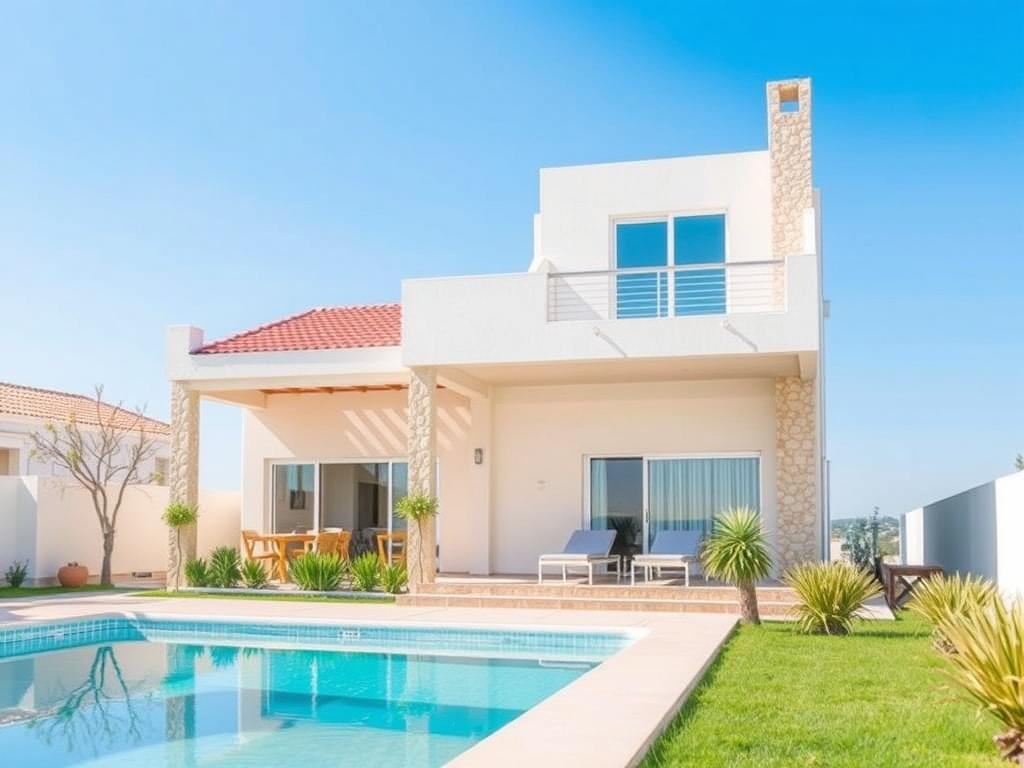

Apartments for sale in Cyprus are attracting buyers from across Europe and beyond, and financing that dream requires clear choices and realistic budgeting. This article walks you through practical routes to obtain a holiday home mortgage Cyprus residents and non-residents use, explains cyprus home financing options in detail, and gives step-by-step guidance to avoid common pitfalls.
Whether you plan to buy a beachfront apartment or a countryside villa, this guide focuses on real-world mechanics: lender types, loan structures, paperwork, tax and currency issues, and application sequencing. Expect concrete numbers, sample scenarios, and a realistic timeline you can adapt to your purchase.
Why Buy a Holiday Home in Cyprus Now
Cyprus offers a stable property market, pleasant climate, and a transparent legal framework for real estate transactions. For many buyers the island combines lifestyle benefits with rental income potential, which affects both loan affordability and lending decisions.
Demand from EU and UK buyers keeps certain coastal locations in steady appreciation territory, but financing choices influence the total cost of ownership more than headline prices. Understanding financing early can change which property you can realistically buy.
Financing decisions determine not only what you can afford today, but how attractive the property will be as an investment over five to ten years.
Core Types of Financing for Holiday Homes
Three broad categories dominate cyprus home financing options: bank mortgages, developer financing, and private lending. Each option has different cost structures, eligibility rules, and speed of execution.
Bank mortgages are the default for buyers seeking competitive rates and long tenors. Developer financing tends to be faster but often more expensive. Private loans offer flexibility but carry higher risk and typically shorter terms.
Bank Mortgages
Banks in Cyprus provide mortgages to residents and many non-residents, subject to due diligence. Loan-to-value ratios vary by applicant profile, property type, and whether the property is a primary residence or a holiday home.
Interest options include fixed, variable, and mixed rates. For foreigners, banks often prefer Euro-denominated loans with initial EURIBOR/ECB-linked margins plus a spread.
Developer and Seller Financing
Developers sometimes offer staged payments or short-term bridging loans, useful for new builds before completion. These deals can include flexible down payments to boost early sales.
However, developers’ incentives differ from lenders’ incentives. Developer financing rarely replaces formal mortgage approval; many buyers refinance to a bank mortgage once construction finishes.
Private and Alternative Lenders
Private lenders and peer-to-peer platforms provide quick funding and bespoke terms. They suit buyers with non-standard income or tight timelines, but rates and fees tend to be higher.
Use private finance as a bridge or for part of the capital stack, not normally as a long-term mortgage for a holiday home in Cyprus.
Bank lending remains the cheapest long-term option for most buyers; alternatives fill timing or documentation gaps.
Who Lends to Non-Residents and What They Require
Non-residents are a substantial share of buyers seeking a holiday home mortgage Cyprus banks accommodate this demand but assess risk more strictly. Expect stricter income verification, higher initial deposits, and sometimes shorter loan tenors.
Typical requirements include passport, proof of address, bank statements, tax returns, proof of income, and a Cyprus-based bank account. Some banks require a local guarantor or higher interest margins for non-residents.
Common Eligibility Criteria
Lenders look at debt-to-income ratios, credit history in any jurisdiction, and the purpose of the loan. Holiday homes are treated differently from owner-occupied homes, often attracting lower LTVs and higher rates.
Employment stability and a clean credit record are decisive. Self-employed buyers should expect to provide two to three years of accounts and tax returns.
Down Payment Expectations
For residents, banks often finance up to 70 to 80 percent of the property value for holiday homes. For non-residents, expect 60 to 70 percent LTV, sometimes lower for luxury properties or new developments.
Higher deposits improve offers: lower rates, longer terms, and more lender choices. If you plan to buy vacation property Cyprus lenders will almost always penalise minimal deposits.
Interest Rates, Terms, and Repayment Structures
Interest rates for holiday home mortgages in Cyprus depend on the lender, loan size, applicant profile, and market conditions. Variable rates tied to EURIBOR are common, with margins of around 1.5 to 3.5 percentage points above the reference rate in many cases.
Fixed-rate options exist for limited periods, typically one to five years, after which a variable rate may apply. Consider a mixed structure: part fixed to secure payments early, part variable to reduce upfront cost.
Typical Loan Tenors
Loan tenors of 15 to 30 years are available for borrowers up to a retirement-related age limit. For holiday home mortgages Cyprus banks may cap the maturity so that repayments end by a certain age, often around 70 to 75.
Shorter terms increase monthly payments but reduce total interest. If rental income or future refinance is likely, stretching the tenor can improve immediate affordability.
Repayment Options and Flexibility
Standard repayment is amortising monthly payments. Interest-only periods are occasionally offered for short durations, and some lenders permit overpayments without penalty, which can accelerate principal reduction.
Ask potential lenders about fees for early repayment and the ability to restructure if your circumstances change, especially if you expect periods of rental income fluctuation.
Understanding Costs Beyond the Mortgage
A mortgage is only part of the cost of buying a holiday home. Closing costs, legal fees, taxes, notary fees, and property transfer taxes add materially to the required capital.
Budgeting realistically prevents last-minute financing shortfalls. Below is a concise table showing typical cost items and approximate ranges to expect in Cyprus.
| Cost Item | Typical Range | Notes |
|---|---|---|
| Deposit / Down payment | 20%–40% of purchase price | Higher for non-residents |
| Property transfer tax | ~3%–8% | Depends on vehicle; reduced for first-time buyers in some cases |
| Legal fees | ~0.5%–1.5% | Fixed fee or percentage-based |
| Notary and registration | €500–€1,500 | Varies by complexity |
| Valuation and survey | €200–€800 | Required by lenders |
| Mortgage-related fees | 0.5%–2% + admin | Arrangement, commitment, and early repayment fees possible |
Plan for additional costs equivalent to about 7 to 12 percent of the purchase price unless advised otherwise by your solicitor.
Step-by-Step Mortgage Application Process
Applying for a holiday home mortgage Cyprus brokers and banks approach this in similar phases. A disciplined sequence reduces delays: pre-approval, property selection, formal application, valuation, and completion.
Each phase requires different documents and decisions. The following list outlines the practical steps most buyers should follow to move from intent to ownership.
- Initial affordability check and pre-approval from one or more lenders.
- Property selection and reservation deposit with a clear contract.
- Formal loan application supported by documentation and proof of funds.
- Property valuation ordered by the lender.
- Loan offer received, reviewed, and signed.
- Completion at the notary, payment of taxes and fees, and property registration.
Throughout this process, communication among your solicitor, bank, and developer is crucial. Misaligned expectations about timing are the biggest cause of transaction failure.
Working with a Mortgage Broker and Local Solicitor
A mortgage broker with Cyprus experience can widen lender options, interpret offers, and negotiate terms. A local solicitor handles title checks, contracts, and tax implications. Both professionals add cost, but they reduce execution risk substantially.
Choose a broker who understands cross-border lending and a solicitor experienced with non-resident purchases. Their advice can affect the structure of your deal and the speed of completion.
What to Expect from Your Solicitor
Solicitors perform legal due diligence: title verification, encumbrance checks, compliance with planning permissions, and preparation for registration. Their work protects you against latent defects and improper transfers.
Insist on a written engagement letter that specifies fees and responsibilities. That clarity prevents surprise charges and slows in the purchase timeline.
Tax, Residency and Currency Considerations
Tax rules affect net yield from rental and the cost of property ownership. Cyprus taxes property transfer and imposes annual municipal and immovable property taxes, with exemptions and thresholds that change over time.
For non-residents, rental income is taxable in Cyprus and must be declared. Double taxation treaties often mitigate overlap with your home country, but you should verify specifics with a local accountant.
Currency Risk Management
Mortgages are typically denominated in euros, which eliminates exchange risk for euro earners. If your income is in another currency, consider hedging strategies or structuring payments to match income streams.
Small exchange rate movements can materially affect repayment costs if your salary or savings are in a different currency. Factor conversion fees into your ongoing budget.
Special Cases: New Builds, Off-Plan, and Buy-to-Let
New builds and off-plan purchases often come with staged payment plans and developer guarantees. Lenders may offer bridging loans during construction and formal mortgages once the property is complete and registered.
If you intend to buy vacation property Cyprus lenders will assess rental projections when underwriting, but they typically lend based on borrower affordability rather than future rental income unless you apply for a buy-to-let product.
Off-Plan Risks and Protections
Off-plan purchases require careful contract review. Confirm completion timelines, penalties for delays, and remedies if the developer becomes insolvent.
Escrow arrangements and bank guarantees can protect deposits; ensure these are included in the purchase agreement.
Buy-to-Let Considerations
Buy-to-let mortgages may allow slightly different LTVs and require proof of expected rental yield. Lenders will want conservative yield assumptions and may require the borrower to demonstrate a contingency buffer.
Short-term holiday rentals attract different regulatory and tax treatment versus long-term lets. Make sure your business plan aligns with local rules and insurance coverage.
Planning for intended use at the time of application clarifies which mortgage products are available and avoids later reclassification by the lender.
Comparing Local Banks, International Banks and Specialist Lenders
Local Cypriot banks have deep experience with the market and established relationships with local solicitors and valuers. International banks may offer more competitive products to certain nationalities or large borrowers. Specialist lenders fill underwriting gaps for complex income situations.
When comparing offers, look beyond headline rates. Consider arrangement fees, valuation fees, early repayment penalties, and administrative convenience such as online servicing and English-language documentation.
- Local banks: best integration with property market and often lower fees for locals.
- International banks: may accept different credit references and have broader product ranges.
- Specialist lenders: work for non-standard borrowers but at higher cost.
Practical Timeline: From Search to Keys
The timeline for buying a holiday home in Cyprus varies, but a practical estimate helps set expectations. A straightforward purchase with pre-approved finance and a property that is ready to transfer typically completes in 8 to 12 weeks.
Off-plan buys and complex legal cases increase the timeline. Here is a sample timeline that maps common stages and realistic durations.
| Stage | Typical Duration | Notes |
|---|---|---|
| Pre-approval | 1–2 weeks | Depends on documentation speed |
| Property selection and reservation | 1–4 weeks | Negotiation time varies |
| Formal application and valuation | 2–4 weeks | Lender valuation scheduling can delay |
| Contract exchange and deposit | 1 week | After solicitor review |
| Completion and registration | 2–4 weeks | Payment of taxes and registration at Land Registry |
Common Mistakes and How to Avoid Them
Buyers often underestimate total upfront costs, choose a lender based only on headline rates, and fail to verify the developer’s track record for off-plan purchases. These errors derail transactions or reduce long-term returns.
Mitigation is straightforward: obtain multiple pre-approvals, request full cost estimates from your solicitor, and insist on independent valuations and surveys where appropriate.
Ask for a complete cost estimate from your adviser that lists all fees and taxes before signing any reservation contract.
Sample Financing Scenarios
To illustrate how choices shape outcomes, consider three practical examples: a resident buyer, a non-resident EU citizen, and a retired overseas buyer with pension income. Each scenario highlights different lender preferences and product suitability.
These scenarios use simplified figures to demonstrate the trade-offs between deposit size, tenor, and expected monthly payments.
Scenario A: Resident Buyer
Buyer profile: Salaried employee, stable income, wants a 2-bedroom coastal apartment priced at €300,000. Bank offers 75 percent LTV at a 25-year tenor with a variable rate of EURIBOR plus 1.8 percent.
Result: Mortgage of €225,000 with monthly payments calculated to fit debt-to-income constraints. Lower deposit than other buyer types makes ownership more accessible.
Scenario B: Non-Resident EU Citizen
Buyer profile: Non-resident, self-employed consultant, wants a €450,000 villa. Bank offers 65 percent LTV at a 20-year tenor with a margin of EURIBOR plus 2.4 percent, subject to two years of audited accounts.
Result: Larger deposit and stricter documentation requirements, but a competitive rate for a non-resident with solid accounts.
Scenario C: Retiree on Pension Income
Buyer profile: Retired, receives pension in euros, wants a €250,000 apartment. Lender offers a 60 percent LTV with a 15-year tenor and a slightly lower margin because income is guaranteed by public pension.
Result: Shorter tenor but secure income yields lender confidence and an acceptable rate for the buyer.
How to Choose the Right Product for Your Goals
Selecting the appropriate mortgage depends on your time horizon, intended use, and tolerance for interest rate movement. If you plan to rent part of the year, a product that accommodates variable income might be suitable.
For a purely holiday-use asset, prioritise lower monthly commitments and flexibility. If the property is intended as a long-term investment, focus on total cost and refinance options.
- Short-term holiday use: favour flexibility and lower monthly payments.
- Buy-to-let: focus on rental yield assumptions and tax efficiency.
- Long-term residency shift: consider mortgage portability and residency-related incentives.
Practical Checklist Before Submitting an Application
Before applying, complete this checklist to avoid delays. Each item either speeds approval or prevents lenders from requesting additional documentation that stalls the process.
Addressing these points in advance reduces the chance of last-minute surprises at valuation or completion.
- Secure a Cyprus bank account for the transaction.
- Prepare certified copies of identity and proof of address.
- Collect two years of tax returns or audited accounts if self-employed.
- Ensure funds for deposit and closing costs are traceable and available.
- Engage a Cypriot solicitor before signing reservation agreements.
A Better Finish: Turning Finance into Ownership
Financing a holiday home in Cyprus is a practical exercise in matching goals, budget, and timing. The right lender and product align with your intended use of the property and your cash flow constraints. Preparing documentation, understanding total costs, and engaging experienced advisors are the levers that transform a tentative search into a completed purchase.
Start with a realistic affordability calculation, get pre-approved, and choose a solicitor who will review contracts with an investor’s eye. When you balance price with the financing structure, you will make a more confident decision and enjoy the property rather than worry about it.
Sound financing turns possibility into ownership; the technical details are what make the dream sustainable.
Frequently Asked Questions
Below are practical questions buyers commonly ask, with concise expert answers to guide immediate next steps.
- Can non-residents get a holiday home mortgage in Cyprus?
Yes. Many Cypriot banks lend to non-residents, typically with lower LTVs, stricter documentation, and slightly higher margins compared to residents.
- What deposit do I need to buy a holiday home in Cyprus?
Expect to provide 20 to 40 percent for residents and 30 to 40 percent or more for non-residents, depending on lender risk assessment and property type.
- Are interest rates for holiday home mortgages higher than for primary residences?
Often yes. Holiday homes are usually seen as higher risk, resulting in higher margins and sometimes shorter terms versus primary residence products.
- What taxes should I account for when buying in Cyprus?
Budget for property transfer tax, registration fees, legal and notary charges, and annual municipal taxes. Tax regimes can change, so consult a local tax adviser for the latest rates.
- How long does the mortgage application process take?
From pre-approval to completion, a straightforward purchase typically takes 8 to 12 weeks. Off-plan transactions or complex legal issues can extend this substantially.
- Can I refinance a developer loan with a bank later?
Yes. Many buyers use developer finance during construction and refinance into a traditional mortgage after registration, often securing better rates.
- Should I use a broker or apply directly to banks?
If you are unfamiliar with Cyprus lending practices or are a non-resident, a specialist broker can broaden options and negotiate terms; direct application suits well-documented, simple cases.